Cart 0
Phase Noise
 Contact Contact us directly
  Calibration certificates Download
  Device search &
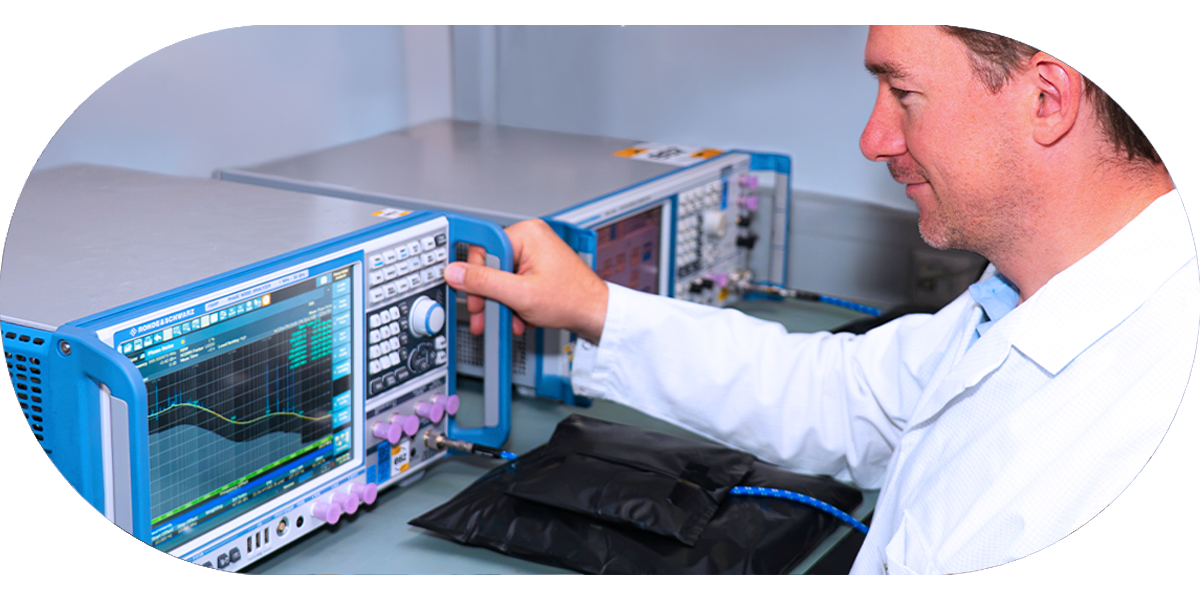
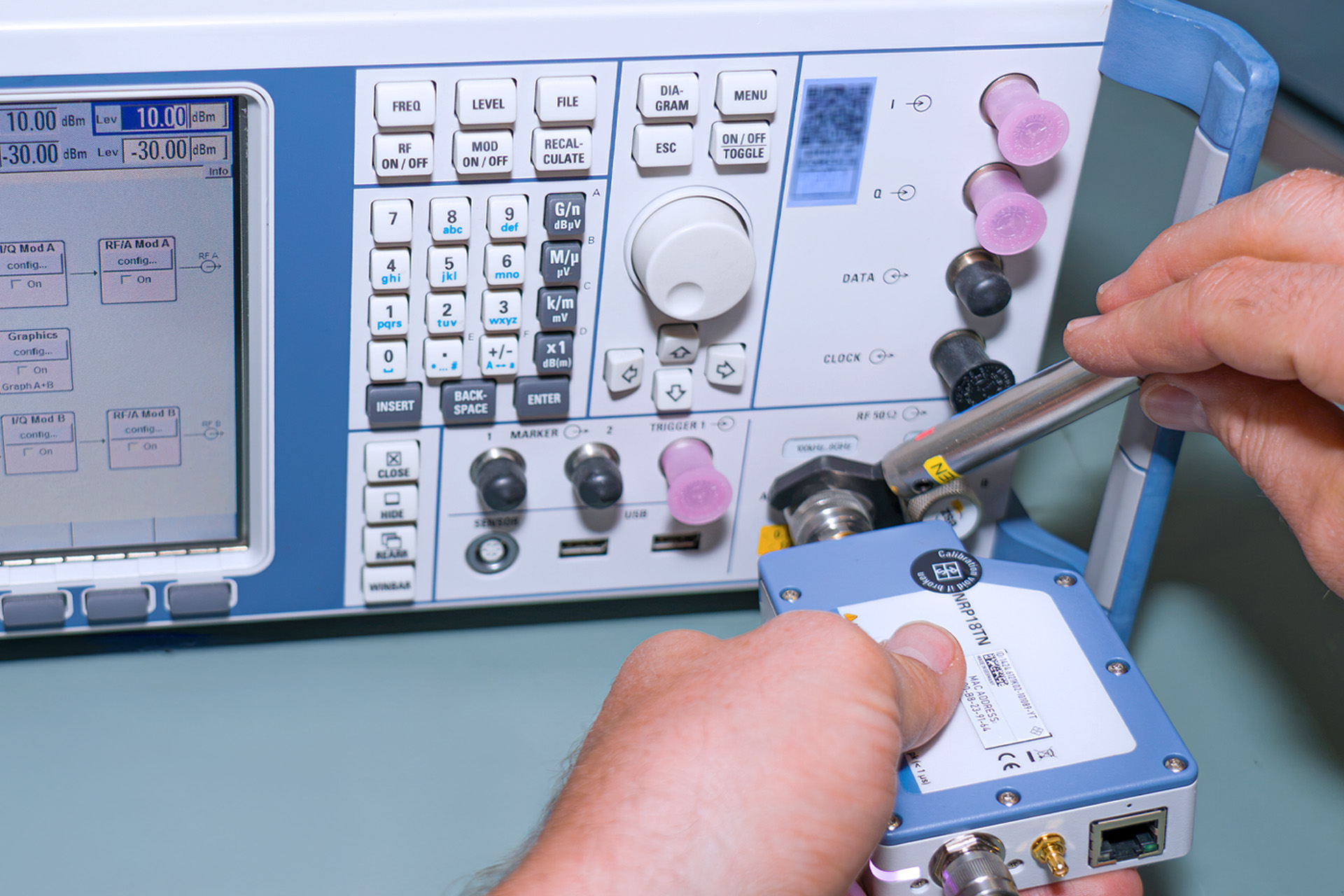
Phase Noise The requirements placed on modern RF systems are continually increasing. Whether in 5G, radar, satellite communications, semiconductor testing or high-precision time and frequency metrology, frequency and power are no longer the only parameters that matter. Phase noise also plays a decisive role in signal quality, stability and ultimately the performance of the entire system. This is precisely where esz AG is expanding its RF calibration portfolio. With phase noise calibration, we can now precisely and traceably determine another key parameter of modern signal generators, synthesisers, frequency standards and other RF sources. We’ll be happy to provide you with a no obligation quote for the calibration of your measuring devices. Our specially designed measurement systems enable phase noise measurements across a broad range: By using modern cross-correlation measurement technology with two independent measurement paths, the inherent noise of the measurement system is largely suppressed. This makes it possible to measure both close-to-carrier and far-from-carrier noise components and to reliably characterise modern ultra-low-phase-noise signal sources. Our measurement systems are also installed on vibration-isolated platforms with a resonance frequency below 0.8 Hz. This reduces the influence of mechanical disturbances and contributes to high measurement stability and low measurement uncertainty, particularly for close-to-carrier measurements. An ideal periodic signal would have a perfectly stable phase. Real oscillators and signal sources deviate from this ideal: their phase is subject to small fluctuations over time. In the frequency domain, these fluctuations appear as noise components around the carrier signal. This is referred to as phase noise. Phase noise is typically specified as noise power spectral density relative to the carrier in dBc/Hz and is considered as a function of the frequency separation from the carrier, known as the offset frequency. A phase noise value should therefore not be considered in isolation. Among other factors, the carrier frequency and offset frequency at which it was determined are crucial. One of the relevant references for the definition of phase noise is IEEE Std 1139™-2022, “Standard Definitions of Physical Quantities for Fundamental Frequency and Time Metrology – Random Instabilities”. Frequency and RF power are established measurands used for the characterisation and calibration of signal sources. However, they do not fully describe the spectral purity or short-term phase stability of a source. This is where phase noise measurement complements the conventional RF measurands. For operators of demanding RF systems, it provides a more comprehensive picture of the characteristics of the signal source being used. Frequency + power + phase noise therefore enable a significantly more comprehensive characterisation of modern RF sources. Phase noise is relevant to a wide range of modern RF sources, including in particular: With the cross-correlation method, two independent measurement paths measure the phase noise of the source under test. Each path has its own inherent noise, which is largely uncorrelated with that of the other path. By mathematically correlating the measurement results, these uncorrelated noise components can be increasingly suppressed. The common signal — the actual phase noise of the source — remains. Put simply: Two independent measurement paths help distinguish the inherent noise of the measurement system from the actual noise of the signal source. This makes it possible to reliably characterise modern ultra-low-phase-noise signal sources with very low phase noise levels. For this purpose, esz AG uses a specially designed reference system based on state-of-the-art phase noise measurement technology, including a Rohde & Schwarz FSWP50.
Greater reliability for your RF applications


Your calibration offer
A broad measurement range for demanding RF applications
Your benefits
-186 dBc/Hz
More Information
These generate the RF signals required for development, testing and operation and, particularly in demanding applications, must provide a correspondingly high level of signal quality.
These are used wherever frequencies need to be generated and set with high precision.
These include, for example, OCXO- and rubidium-based systems used for synchronisation and time distribution applications.
These are key components in numerous radar, communications and measurement systems.
Particularly in complex RF test systems, reproducible and reliable signal source characteristics can be crucial to the quality of the overall test process.
These applications combine high requirements for frequency stability, signal quality and reliability.

Contact us directly