Cart 0
Proficiency tests
 Contact Contact us directly
  Calibration certificates Download
  Device search &
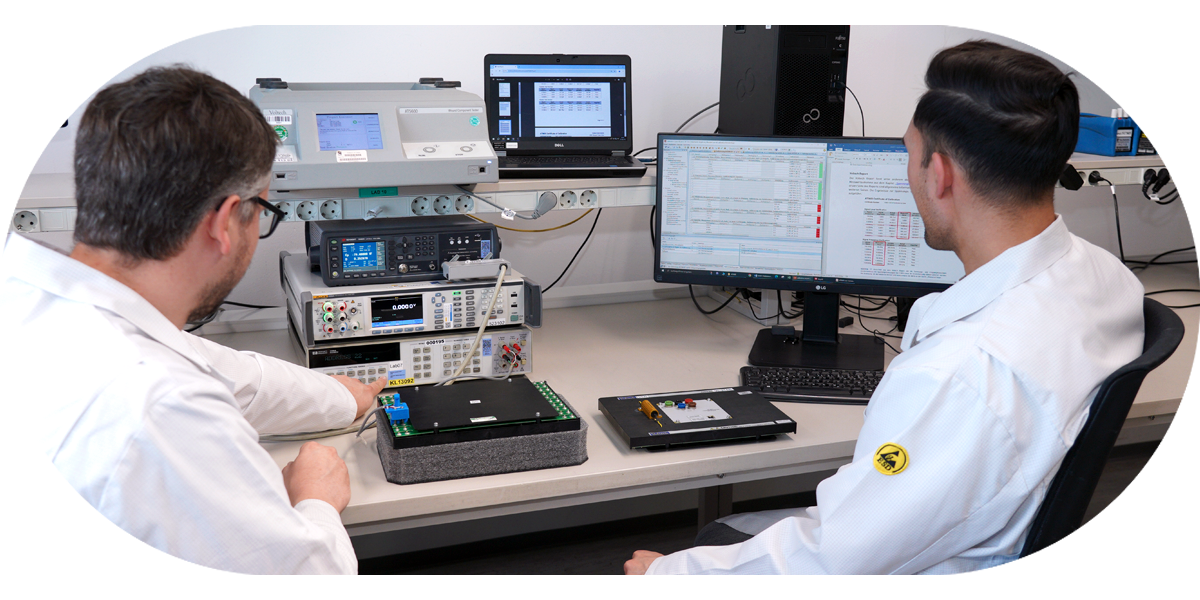
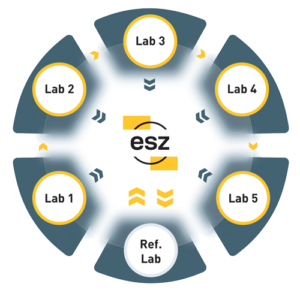
Proficiency tests Are you planning a proficiency test? Our metrology experts will assist you in the design, implementation, and evaluation of your test and support you in the validation of your measurement procedures. esz AG offers proficiency testing in accordance with its accreditation under DIN EN ISO/IEC 17043:2023. The current scope of our accreditation can be found in the annex to the accreditation certificate. Alternatively, esz AG can also carry out proficiency tests outside the accredited area in accordance with the service portfolio of our calibration laboratories. Four different methods are available for determining reference data in the proficiency test organized by esz AG. Method A or Method D are used as standard. Methods B, C, and D are statistical methods that calculate the reference data taking into account participant data. A detailed analysis of these methods, as well as a comparison using sample data sets and further information on performance evaluation, can be found in the white paper (in German) „Eignungsprüfungen zwischen Kalibrierlaboratorien – Statistische Auswertung von Vergleichsmessungen“. Your proficiency test offer esz AG offers proficiency testing either as interlaboratory comparisons with several participating laboratories or as individual, bilateral comparison measurements. We design these flexibly-tailored to your task and the desired time of execution. Request your non-binding quote for participation in our proficiency tests now — our team is happy to help. Contact us! Scheduling will begin once the minimum number of participants has been reached. esz AG calibration & metrology offers a wide range of proficiency tests and comparative measurements that can be flexibly tailored to your requirements: esz AG calibration & metrology is a provider of proficiency tests accredited in accordance with DIN EN ISO/IEC 17043:2023. Details of our current scope of accreditation can be found in our annex to the accreditation certificate. We also offer proficiency testing in a non-accredited framework based on the current service portfolio of our calibration laboratory. There is no difference in methodology: we always work in accordance with the requirements of DIN EN ISO/IEC 17043:2023, both in the accredited and non-accredited areas. Definition of suitability test: According to DIN EN ISO/IEC 17043:2023: Evaluation of a participant’s performance according to previously established criteria by means of comparisons between laboratories. Official term for comparative measurements organized in accordance with ISO 17043. Interlaboratory Comparison (ILC) General term used to describe the comparison of a measurement/calibration/test by different participants. Almost always includes an evaluation of the performance of the participants and is therefore almost synonymous with “proficiency test”. Ring comparison/star comparison/flower comparison Bilateral comparison: Special form of comparative measurement with only two participants, or one participant and one reference laboratory/reference value. As an accredited provider, esz AG calibration & metrology plays a central role in conducting proficiency testing and comparative measurements. Our tasks include: Our comprehensive expertise ensures that the proficiency tests and comparative measurements are carried out efficiently, reliably, and in accordance with the highest quality standards. The following can participate: The prerequisite is that participants are able to perform the calibration according to the required procedures and can submit the results in a calibration certificate in accordance with ISO 17025. Only then is an evaluation in accordance with the requirements of ISO 17043 and the accreditation body possible. Participation in proficiency tests and comparative measurements is mandatory for accredited laboratories in accordance with DIN EN ISO/IEC 17025. These tests are a central element in the validation of calibration procedures and results within the framework of a laboratory’s quality management system. They also provide an independent method for quality assurance of the measurement procedures used. Proficiency tests and comparative measurements enable laboratories to demonstrate their performance and identify potential for optimization. They thus contribute significantly to continuous improvement and compliance with the highest quality standards. Proficiency tests are essential tools for ensuring and optimizing laboratory quality. They offer numerous benefits, including: These advantages mean that proficiency tests and comparative measurements make a decisive contribution to the continuous improvement of laboratory work and to strengthening confidence in the results.
Proficiency tests with esz AG
Brochure

Our portfolio
1. Standard proficiency test
2. Proficiency testing based on customer request
3. Bilateral comparison
4. Evaluation by esz
White Paper
Factsheet
Evaluation methodology

Planned Suitability Tests
Annual Plan 2026
Area
Subject
Measurement object
Participants
Electrical quantities
Voltage / Current / Resistance
Digital multimeter
7 – 10
High-frequency quantities
Oscilloscope quantities
Oscilloscope
5 – 10
Mechanical quantities
Pressure
Digital pressure gauge (air, 0 bar to 70bar)
7 – 10
Mechanical quantities
Pressure
Digital pressure gauge (air, 0 bar to 35bar)
7 – 10
Dimensional measurements
Length measuring devices
Caliper (150 mm)
7 – 10
Register now to secure your spot.
Your benefits
More information


Contact us directly